
For more than a century, owning a car symbolised freedom, independence, mobility and status. Today in Singapore, where owning four wheels can cost a fortune, the mobile phone may be taking over the role.
For many Singaporeans, the phone in their hand is also a fashion accessory, a lifestyle statement and a very public declaration of personal taste.
Some people place their car keys strategically on the restaurant table so everyone can see the car they drive.
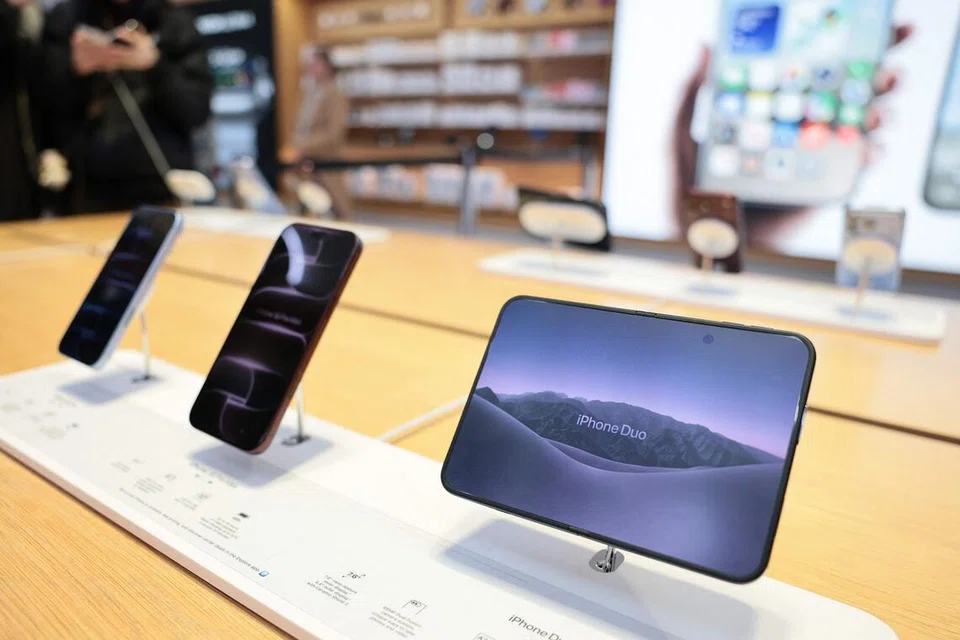
You may not own a BMW, Mercedes or Tesla, but you can pull out the latest iPhone or Samsung Galaxy and make your mark.
Imagine that! No COE required. No parking fees. No ERP.
The phone has also become remarkably similar to the automobile in another respect.
Just as people sometimes replace perfectly serviceable cars with newer models, many consumers eagerly dump their phones for the newest release.
It may have a slightly sharper camera, a trendier colour scheme or a sleeker design, but deep down, the motivation is simply the irresistible thrill of showing off.
The history of the automobile gives us another clue about the future of phones.
Luxury becomes the standard
Air-conditioning, electric windows and remote central locking were once exclusive selling points for expensive models.
Today, these can be found even in pick-up trucks.
Phones have followed the same trajectory.
GPS, high-resolution cameras, and every bell and whistle on top-of-the-range models can now be found in nearly every mobile phone.
We also have another curious development.
Cars showed us that not all of us are driven by logic.
Who would have predicted the popularity of large vehicles designed for rugged off-road adventures being used primarily to transport children to school and for trips to the supermarket on well-paved roads?
Alas, the nearest thing to off-roading in Singapore may be an unexpected speed bump.
Phones have followed an equally unpredictable path.
People carry phones that are vastly more powerful than the computers that once sent astronauts to the moon, mainly to play Candy Crush or watch TikTok videos.
Wireless earpieces, meanwhile, created a new social phenomenon of perfectly ordinary people walking alone and gesticulating animatedly along Orchard Road, as if having urgent conversations with themselves.
Then, perhaps the biggest lesson from the automobile is that there is unlikely to be one perfect phone for everyone.
Cars come in different shapes and sizes because people have different needs. There are family cars, sports cars, small city cars and enormous SUVs. Some households even own several because one vehicle cannot do everything.
Phones could be heading in the same direction. Already, there are people with two, even three phones.
There is one for social media. Another for work. The third for everything else.
So the future may not bring a single device that does everything. It may bring a wider variety of specialised phones and people switching between them, depending on what they are doing.
There is also a delicious irony here. While cars allowed us greater freedom of movement, phones have given us the freedom to be everywhere without actually going anywhere.
You can now sit on your sofa, attend a meeting, shop, pay your bills, watch a film and argue with strangers online without moving more than a finger.
That may be the ultimate evolution of mobility.
And with the advent of autonomous vehicles, we may have phones that can automatically respond to calls and messages on our behalf.
At that point, the phone may no longer be the new car. It will be the driver.
So, if you want clues about where the mobile phone is headed, you may not need to visit a technology expo, just check out the nearest car park.