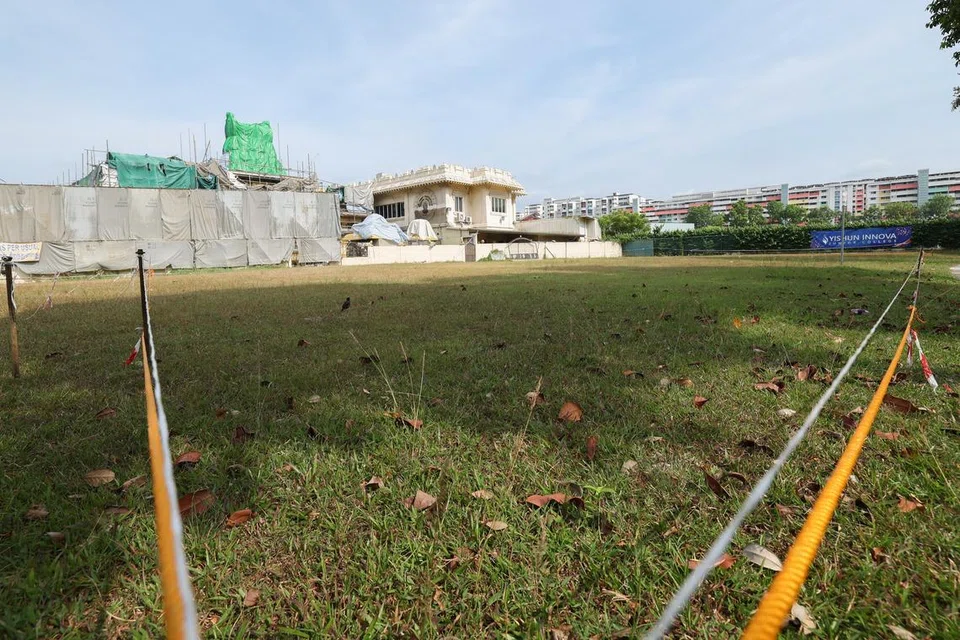
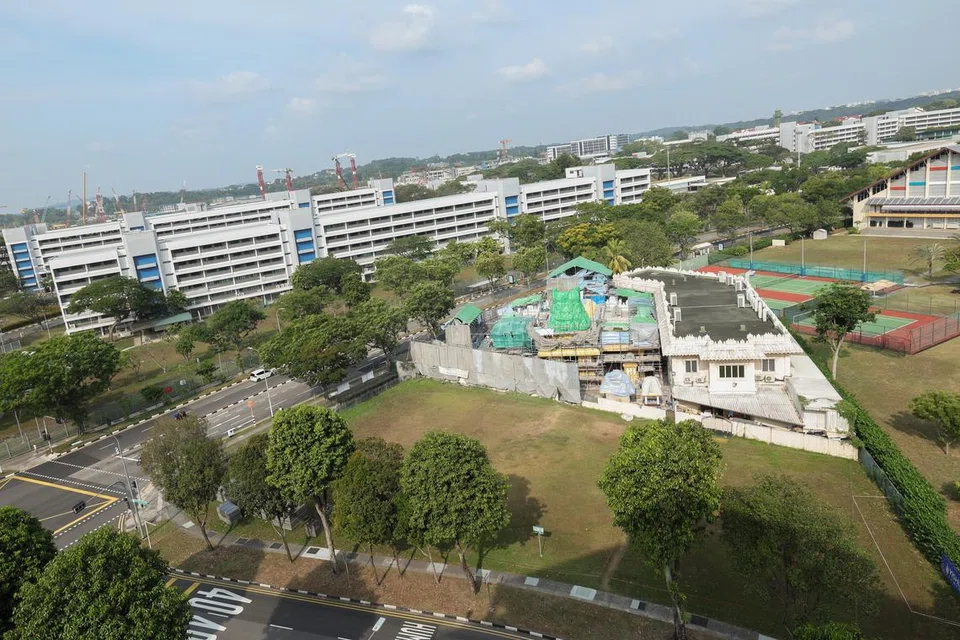

Hindu devotees in Singapore, from young to old, are eagerly anticipating the development of a new Hindu temple in a land parcel along Yishun Avenue 3.
The site, already allocated by the Government, is located in close proximity to Yishun Innova Junior College among residential blocks.
Following consultations with the Hindu Advisory Board and other community stakeholders, the new temple, named Sree Guruvayoorappan Ayyappan Temple (SGAT), is expected to commence construction in August or September 2026.
Entrepreneur and the new temple’s fund-raising chairman JK Saravana, a long-time Swami Ayyappa devotee who has visited Sabarimala for 36 years, said the upcoming Yishun temple is not meant to replace Sabarimala or Guruvayoor, but to recreate their spiritual experience for devotees.
“We will have the 18 sacred steps (like at Sabarimala),” Mr Saravana noted. “Making it accessible especially for the elderly and those unable to travel to Kerala.”
According to available data, while there are shrines, sanctums, and specific temples for Guruvayoorappan and Ayyappan respectively across the world, there isn’t a temple outside of India dedicated to both these deities simultaneously. This makes SGAT a unique proposition.
It will be near an existing Hindu temple in Yishun, Sree Maha Mariamman Temple, which is preparing for its consecration ceremony this year. Holy Tree Balasubramaniar Temple (HTSB) is the other Hindu temple in Yishun.
The last Hindu temple to be built in Singapore was the Arulmigu Velmurugan Gnanamuneeswarar Temple in Sengkang in 2006.
Announcing the plans to the media at HTSB on March 28, Minister of State for Culture, Community and Youth, Dinesh Vasu Dash, noted that there is currently no temple in Singapore dedicated to the two deities, Guruvayoorappan and Ayyappan. The new SGAT will allow devotees to worship several deities alongside these two main deities.
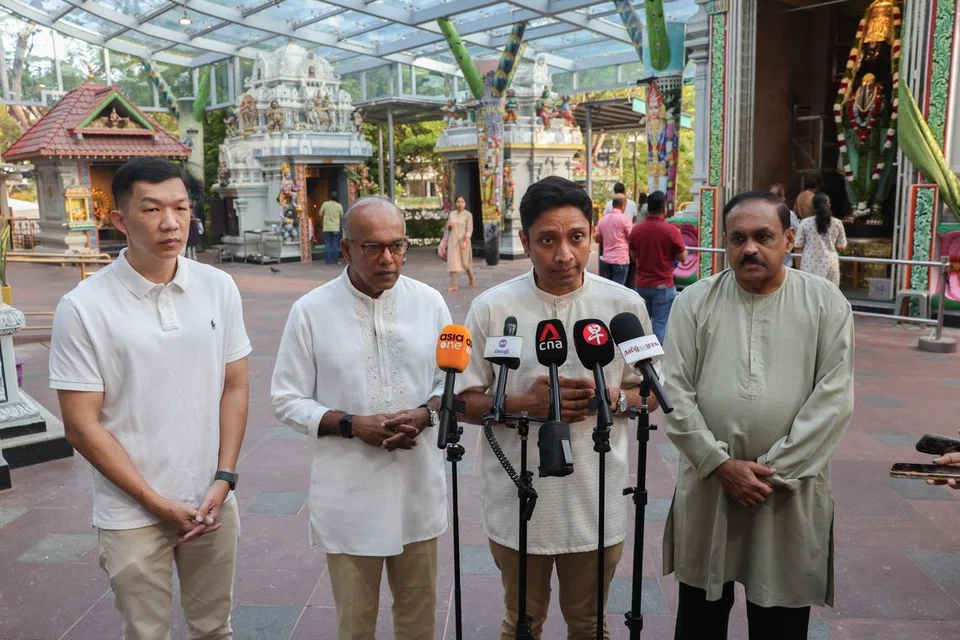
Noting that the northern part of Singapore has a higher concentration of Indian residents, Mr Dinesh said the new temple is well-positioned to serve the community.
In particular, the temple would serve as a starting point for Singaporean pilgrims, many of whom travel to the Sabarimala Sree Dharma Sastha Temple (Sabarimala) in Kerala, India. The new temple would possibly make it easier for devotees, particularly elderly worshippers, to begin their spiritual journey, he added.
Mdm Kaliammal, 79, has dreamt of visiting the holy shrines of Kerala, particularly the Sabarimala. However, the physically demanding journey has always been a hurdle.
“At my age, travelling all the way to Sabarimala is difficult,” she said. “If this temple reflects the Sabarimala shrine, it will feel like I am getting a chance to experience it here without going to Kerala.”
Sabarimala, dedicated to Lord Ayyappan, attracts 40 to 50 million devotees annually, and involves a challenging 41-day preparatory trek to the hilltop shrine. The physically demanding journey can be particularly challenging for elderly pilgrims.
Additionally, Guruvayoor Temple, also in Kerala, is dedicated to Lord Guruvayoorappan (Lord Krishna) and draws millions each year.
The two temples are especially significant to the Malayalee diaspora as they are located in their home state of Kerala and are closely linked to longstanding religious traditions and family practices.
Yishun resident Hariragul Thangaraj, 31, has been living in the area for almost a decade. Though he welcomes the move, he said that Yishun already has several Hindu temples and newer estates like Tengah should also be considered for one.
The new temple dedicated to Lord Guruvayoorappan and Lord Ayyappan has been a long-standing desire, particularly among the Malayalee community in Singapore, and it will satisfy that desire, noted Minister for Home Affairs K. Shanmugam, who was present at the media briefing.
“Beyond the Malayalee community, many other Hindus, including the Tamils, North Indians, the great devotees of the Ayyappan as well as Guruvayoorappan, millions make the pilgrimage in India to these two temples, and the fact that there is a dedicated temple for these two deities and other deities will fulfil the aspiration of all Hindus. (The) Malayalee community will be very happy,” said Mr Shanmugam, who is also the anchor minister for Nee Soon GRC and Coordinating Minister for National Security.
Mr Dinesh said SGAT plans to deploy priests from Kerala, particularly those from the Sabarimala Temple.
SGAT will reflect Singapore’s concept of Harmony Circles, in which places of worship contribute to community cohesion. This will offer an opportunity for people of all races to better understand Hinduism and appreciate the strength of multiculturalism in Singapore, Mr Dinesh said.
The new temple’s design will differ from the architectural style of many existing Hindu temples in Singapore, which are often marked by towering gopurams (ornamental entrance towers). It will take inspiration from the traditional Kerala gable, a design that facilitates natural airflow while maintaining a distinctive aesthetic.
The temple will also have an annex building, featuring a multi-purpose hall and event spaces to host cultural, educational and social outreach programmes. These facilities will support community-building initiatives such as interfaith collaboration and food distribution.
Mr Jayakumar Narayanan, director of House Brand curry powder and spices who has done a lot of work on this temple, said: “Carrying the grace of Guruvayoor Temple and Sabarimala Temple, may this temple bring peace, devotion, and inner strength to every heart, guiding all on a path of faith, humility, and divine blessings,”
Also present were Nee Soon East division MP Jackson Lam, and Mr R. Ravindran, former MP and chairman of SGAT’s board of trustees.
Mr Ravindran, who will oversee SGAT’s plans, said the temple would be built in the Kerala style, with features that mirror traditional temples there, including the 18 steps of a Sabarimala-style Ayyappan shrine and elements inspired by the Guruvayoor Temple.
“We are working on accommodating more devotees, though numbers may vary,” he noted.
Responding to media queries, a Ministry of Culture, Community and Youth spokesperson said plans for the temple are still in the developmental stage, with the construction timeline dependent on factors such as design and construction complexity, as well as the necessary planning and regulatory approvals, adding that SGAT will bear its own development and construction costs without subsidy. More details will be shared at a later date.
The spokesperson added that during construction, the temple will work with the relevant authorities and grassroots advisers to minimise inconvenience and disamenities, and will abide by permissible noise limits and construction hours.
SGAT will be the 25th Hindu temple in Singapore, said the spokesperson.